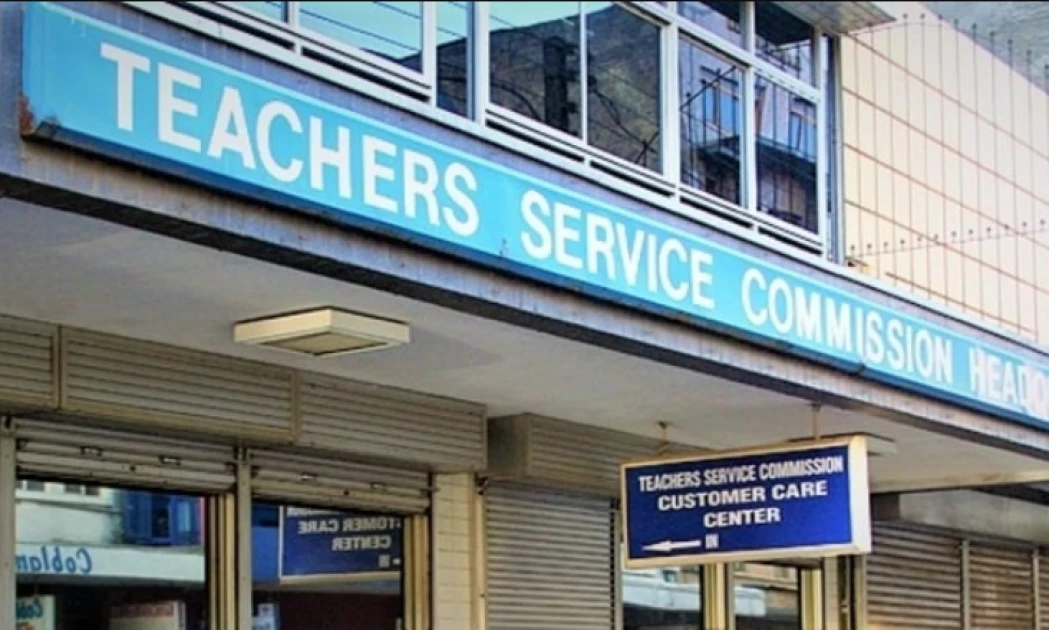
Teachers applying for advertised vacancies under the Teachers Service Commission (TSC) recruitment exercise for the 2026/2027 financial year should pay close attention to their academic qualifications, professional documents and application information. Meeting the minimum academic requirements is important, but candidates must also ensure that their documents are genuine, complete and consistent with the details submitted during the application process.
TSC Circular No. 15/2026, dated 13 August 2026, provides guidelines for recru iting teachers into post-primary institutions on permanent and pensionable terms. It outlines eligibility conditions, the selection process, document verification and the responsibilities of officers involved in recruitment.
This article explains TSC recruitment certificate verification 2026/2027, the documents candidates may be required to present, and common mistakes applicants should avoid. It is an independent explanation of the circular, not a separate announcement of vacancies. Applicants should always check the actual vacancy advertisement for the relevant subject combination, application instructions and deadlines.
Why certificate verification matters during TSC recruitment
Certificate verification helps the selection panel establish whether an applicant meets the academic and professional requirements for an advertised teaching position. It also allows the panel to compare the original documents with the information supplied during the application process.
A candidate may have the necessary qualifications but still experience difficulties if the documents presented at the interview are incomplete, unclear or inconsistent. For this reason, applicants should prepare their documents before receiving an interview invitation.
The circular requires applicants to appear personally before the selection panel and produce original documents together with clear photocopies. Candidates should not rely on photocopies alone where originals are required.
The guidelines also make teacher registration an essential condition. Under Section 23(1) of the Teachers Service Commission Act, 2012, applicants must be registered teachers to qualify for consideration. Academic qualifications do not replace the legal requirement for teacher registration.
Documents candidates should prepare for verification
Applicants should organise their academic and professional records in advance. The documents identified in the recruitment guidelines include:
| Document | Why it matters |
|---|---|
| National Identity Card | Helps confirm the applicant’s identity |
| TSC registration certificate | Demonstrates teacher registration |
| Degree or diploma certificate | Shows the academic qualification held |
| Professional teaching certificate | Supports verification of teacher training |
| Official academic transcripts | Provides details of academic units and results |
| KCSE certificate | Helps confirm secondary-school grades |
| KCPE certificate | Forms part of the listed academic records |
| School leaving certificates | Supports the applicant’s education history |
| Relevant testimonials | Provides additional supporting information |
| Affidavit, where applicable | Explains differences in names appearing on documents |
| NCPWD card, where applicable | Supports disability-related recruitment arrangements |
Applicants should prepare both originals and clear photocopies. The circular specifically indicates that provisional transcripts are not accepted. Candidates should therefore contact their training institutions early if they still need official transcripts.
Where a candidate repeated KCSE or KCPE, the relevant certificates for the applicable attempts should also be prepared as required by the guidelines.
Academic qualifications must match the advertised subject combination
One of the most important checks during recruitment is whether the candidate’s academic qualifications match the subject combination advertised for the vacancy.
Applicants should not assume that holding a degree or diploma automatically makes them eligible for every teaching position. The relevant academic subjects, professional training and minimum grades must be considered together.
Candidates should carefully compare:
- The subject combination appearing in the vacancy advertisement.
- The subjects studied at university or college.
- The grades obtained in the relevant KCSE subjects.
- The professional teacher-training qualification.
- The official transcripts showing the academic units completed.
The circular sets out different requirements for graduate, diploma and technical teachers. A qualification that is acceptable for one category should not automatically be treated as sufficient for another.
Where an applicant is uncertain about whether a particular course or subject combination qualifies, the candidate should seek clarification through the relevant TSC County Director rather than relying on assumptions or unofficial advice.
Common application mistakes that may affect candidates
The recruitment guidelines establish several requirements that applicants should observe. The following mistakes can create avoidable problems during screening or verification.
1. Applying without confirming TSC registration
Teacher registration is a basic eligibility condition. Candidates should confirm that they are properly registered before applying.
An applicant who meets the academic requirements but does not satisfy the registration requirement may not qualify for consideration under the circular.
2. Presenting provisional transcripts
The circular states that provisional transcripts are not accepted during the verification process. Applicants should obtain official transcripts from their universities or colleges before attending the interview.
Waiting until the interview date to request official academic records can create unnecessary pressure.
3. Carrying photocopies without originals
Candidates are expected to present original documents alongside clear photocopies. Photocopies alone may not satisfy the verification requirement.
Keep the originals safe and arrange the photocopies in a logical order for easier checking by the selection panel.
4. Providing inconsistent personal details
Differences in names across certificates, identity documents and professional records can raise questions during verification.
Where names differ, the circular identifies an affidavit as a relevant supporting document. Candidates should address such differences before the interview instead of waiting for the panel to discover them.
5. Applying for a subject combination that does not match one’s qualifications
Applicants should read the vacancy requirements carefully. A candidate may possess a teaching qualification but lack the required academic subject combination for a particular post.
The advertised subject combination should guide the application.
6. Ignoring the interview invitation details
Shortlisted candidates are notified through SMS, with the interview venue, date and time communicated in advance. Applicants should check their messages and make arrangements to attend at the correct location and time.
7. Failing to prepare supporting documents
Candidates should not wait until the last moment to collect certificates, transcripts, testimonials and other relevant records. A well-organised document file makes verification easier and reduces the risk of forgetting an important item.
What happens if an applicant does not meet the requirements?
The circular makes clear that applicants must meet the stated eligibility conditions. It specifically identifies teacher registration as a requirement and provides academic and professional qualification standards for the different teacher categories.
Candidates should understand that selection is not based solely on attending an interview. Eligibility checks, document verification and the applicable selection score guide all form part of the recruitment process.
The circular does not provide a single exhaustive list titled “all reasons for disqualification.” Applicants should therefore avoid relying on unofficial lists circulating online. Instead, they should read the actual recruitment guidelines and the specific vacancy advertisement.
Where a candidate believes that a decision was made incorrectly, the circular provides a complaints and appeals process. A written complaint should be submitted promptly to the County Director, with an email to TSC headquarters within seven days of the selection process. The guidelines also provide for a further appeal where the applicant is dissatisfied with the County Director’s decision.
A practical document-preparation checklist
Before attending an interview, applicants can use this checklist:
-
Confirm that TSC teacher registration requirements are satisfied.
-
Read the vacancy advertisement and confirm the subject combination.
-
Arrange the original National Identity Card.
-
Prepare the TSC registration certificate.
-
Collect the relevant degree or diploma certificates.
-
Obtain official transcripts rather than provisional transcripts.
-
Prepare KCSE and KCPE certificates, including relevant repeat attempts where applicable.
-
Include school leaving certificates and relevant testimonials.
-
Prepare an affidavit if names differ across documents.
-
Carry the NCPWD card where applicable.
-
Make clear photocopies of the required documents.
-
Confirm the interview venue, date and time from the official communication.
Where candidates can confirm official information
Applicants should use official TSC channels when checking recruitment information, teacher registration and advertised posts.
- TSC official website: https://www.tsc.go.ke/
- TSC online services: https://tsconline.tsc.go.ke/
- TSC teacher recruitment and staffing information: https://www.tsc.go.ke/
- Kenya National Examinations Council: https://www.knec.ac.ke/
- Eunflex official website: https://www.eunflex.com/
The TSC online services platform explains that advertised teacher posts are applied for online and that applicants can track the processing of their applications. It also states that applicants do not need to submit a hard-copy application after applying online and that no payment is required for the advertised-post application process. Always follow the instructions in the particular vacancy advertisement.
Frequently asked questions
1. Does TSC require original certificates during recruitment interviews?
The recruitment circular requires candidates to attend in person with original documents and clear photocopies for verification.
2. Can I attend the interview with provisional transcripts?
No. The circular states that provisional transcripts are not accepted. Applicants should obtain official transcripts from their training institutions.
3. Is TSC registration compulsory for applicants?
Yes. The circular states that applicants must be registered teachers in accordance with Section 23(1) of the Teachers Service Commission Act, 2012.
4. What should I do if my names differ across certificates?
The guidelines identify an affidavit as a supporting document where names differ. Applicants should prepare the relevant documentation to explain the discrepancy.
5. Can I apply for a vacancy if my degree is in a different subject?
Applicants should compare their academic qualifications and professional training with the exact subject combination in the advertisement. Holding a degree alone does not establish eligibility for every teaching subject.
6. What can I do if I believe my application was unfairly handled?
The circular provides a written complaints and appeals procedure. A candidate should submit a complaint to the County Director and email TSC headquarters within the specified seven-day period.
In conclusion, Preparing for TSC recruitment 2026/2027 involves more than submitting an online application. Candidates should confirm teacher registration, check that their academic qualifications match the advertised subject combination and organise all required documents before attending an interview.
The most avoidable problems include missing original certificates, provisional transcripts, inconsistent names and applying without checking the vacancy requirements. Taking time to prepare can make the verification process more straightforward.
Applicants should rely on the official TSC circular, the relevant vacancy advertisement and official Commission communication rather than unverified social media claims.